
Every AI Engine Picks Sources Differently. We Track All of Them.
ChatGPT prefers big-name sites like Forbes. Perplexity pulls from YouTube. Claude only cites company websites and blogs. What works on one engine doesn't work on another. FogTrail tracks all five.
5 Engines, 5 Different Rules
Each AI search engine has its own preferences for what sources it trusts, how many it includes, and how long it takes to pick up new content.
| Engine | Key Insight | Sources | Authority | Biases | Time to Citation |
|---|---|---|---|---|---|
ChatGPT | Acts like Google. Prefers big, well-known sites (Forbes, Business Insider). Hardest engine for startups to break into. | ~10 | Highest | Wikipedia, Reddit | 2-4 weeks |
Perplexity | Easiest to get cited on. New content can show up within hours. But results vary: the same question can cite different sources each time. | ~7-10 | Lowest | YouTube (almost no Reddit) | Hours to days |
Gemini | Strongly favors recent content. Uses Google Search signals. Fresh, updated content is the best way in for newer companies. | ~20 | High | YouTube, Medium, Reddit | 1-3 weeks |
Grok | Cites the most sources per answer. Pulls from all platforms fairly evenly. X/Twitter gives it a unique real-time signal. | ~24 | Moderate | Balanced (all platforms) | 2-4 weeks |
Claude | Pickiest engine. Mostly cites company websites and blogs. Ignores Reddit, YouTube, Medium. Penalizes salesy language. Hard to earn, but stays once you do. | ~10 | Very high | Individual company websites and blogs only | 6-12 weeks |
8 Inputs Per Article. Not 2.
Most tools take a query and some search results and write a blog post. That produces generic content AI engines have no reason to cite. FogTrail uses all of the following to write a single article.
Your Product
What you do, who you serve, what makes you different
Your Competitors
Their features, pricing, weaknesses, how they position themselves
What AI Engines Say (All 5)
What each engine says about your market, who they recommend, and why
Campaign Report
A summary of what changed, what competitors are doing, and where the opportunities are
Your Content Library
Everything you've already published, so nothing gets duplicated
Search Queries
The exact questions people are asking AI engines
Citation Map
Which of your articles show up for which queries, on which engines
Your Feedback
Corrections and context you give through chat that the AI wouldn't know on its own
Know What AI Engines Say About Your Market
When you're not getting cited, FogTrail doesn't just tell you. It reads what each engine is saying about your market: who they recommend, what claims they make, and where you're missing.
The system turns this into a clear campaign report: here's what changed, here's what your competitors are doing, and here's what content to create next. Not vague advice. Specific actions based on what engines are actually saying.
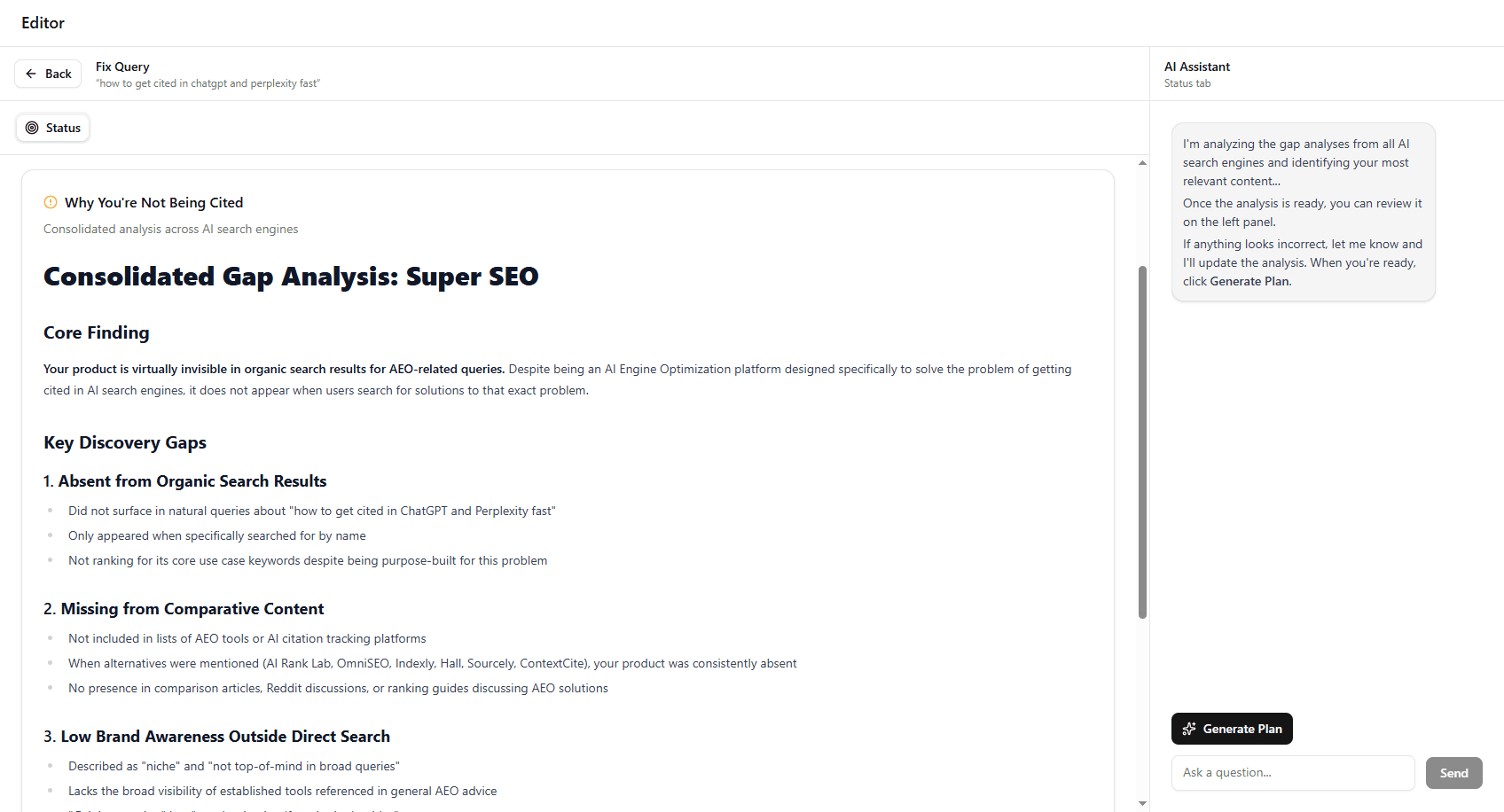
Click to expand
FogTrail vs. Alternatives
| Capability | FogTrail | Most AEO Tools |
|---|---|---|
| Engines tracked | All 5: ChatGPT, Perplexity, Gemini, Grok, Claude | 1-3 engines, often Perplexity only |
| Context per article | 8 inputs: your product, competitors, engine data, content library, and more | A URL, a query, and some search results |
| Competitive insights | Reads what engines say about your market, turns it into a campaign report | Generic tips based on search results |
| Speed | All 5 engines checked at the same time | One at a time, or single-engine only |
| Engine-level detail | See exactly which engines mention you and which don't | Just "cited" or "not cited" overall |
| Actionable output | Campaign with specific content to create, ready for your approval | Raw data you have to interpret yourself |
AI engines tracked
Inputs per article
Check cycle
All engines checked at once